What makes a cafe feel like it belongs to its neighborhood? It often begins with making room for more than one kind of visit.
Different rhythms, one room
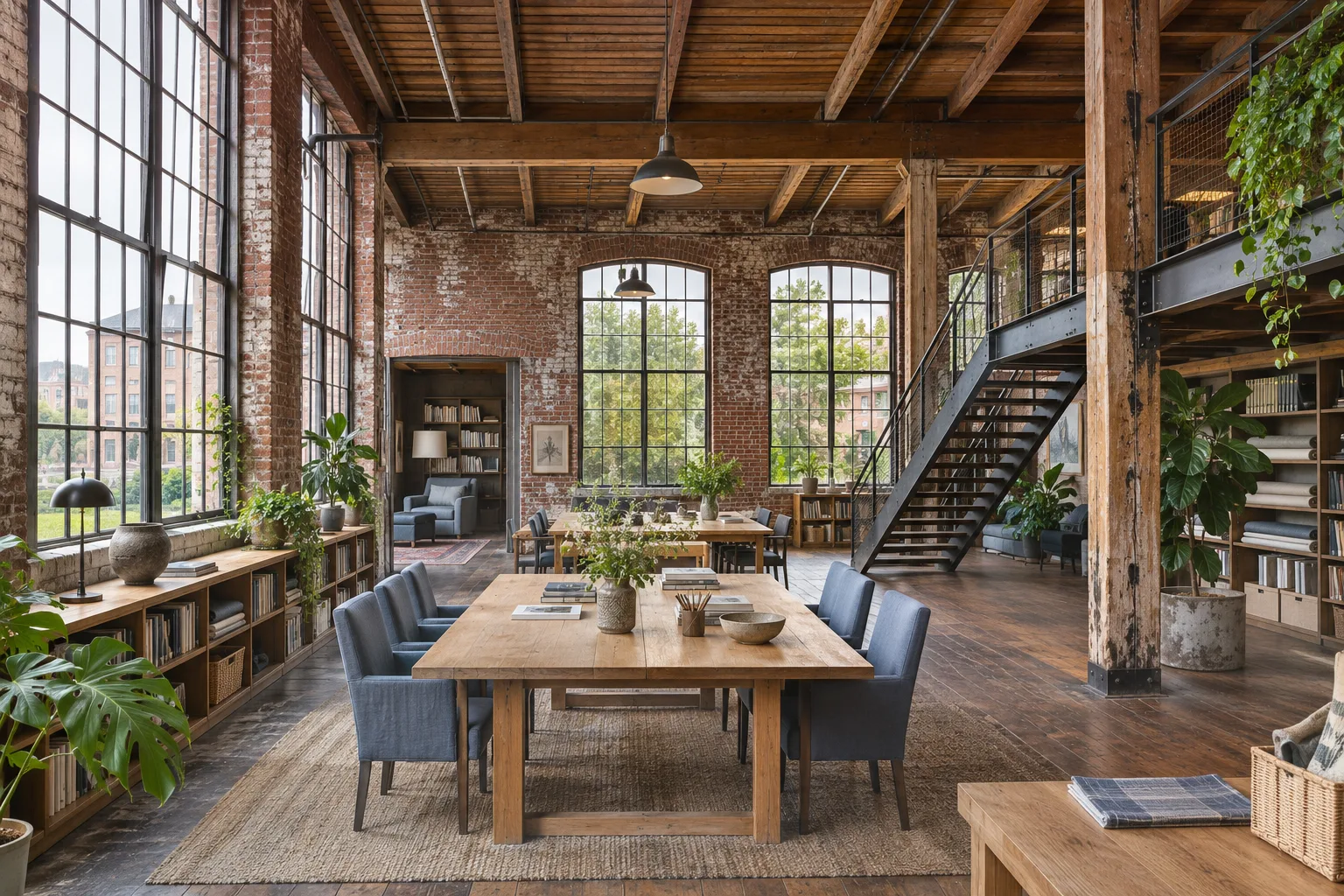
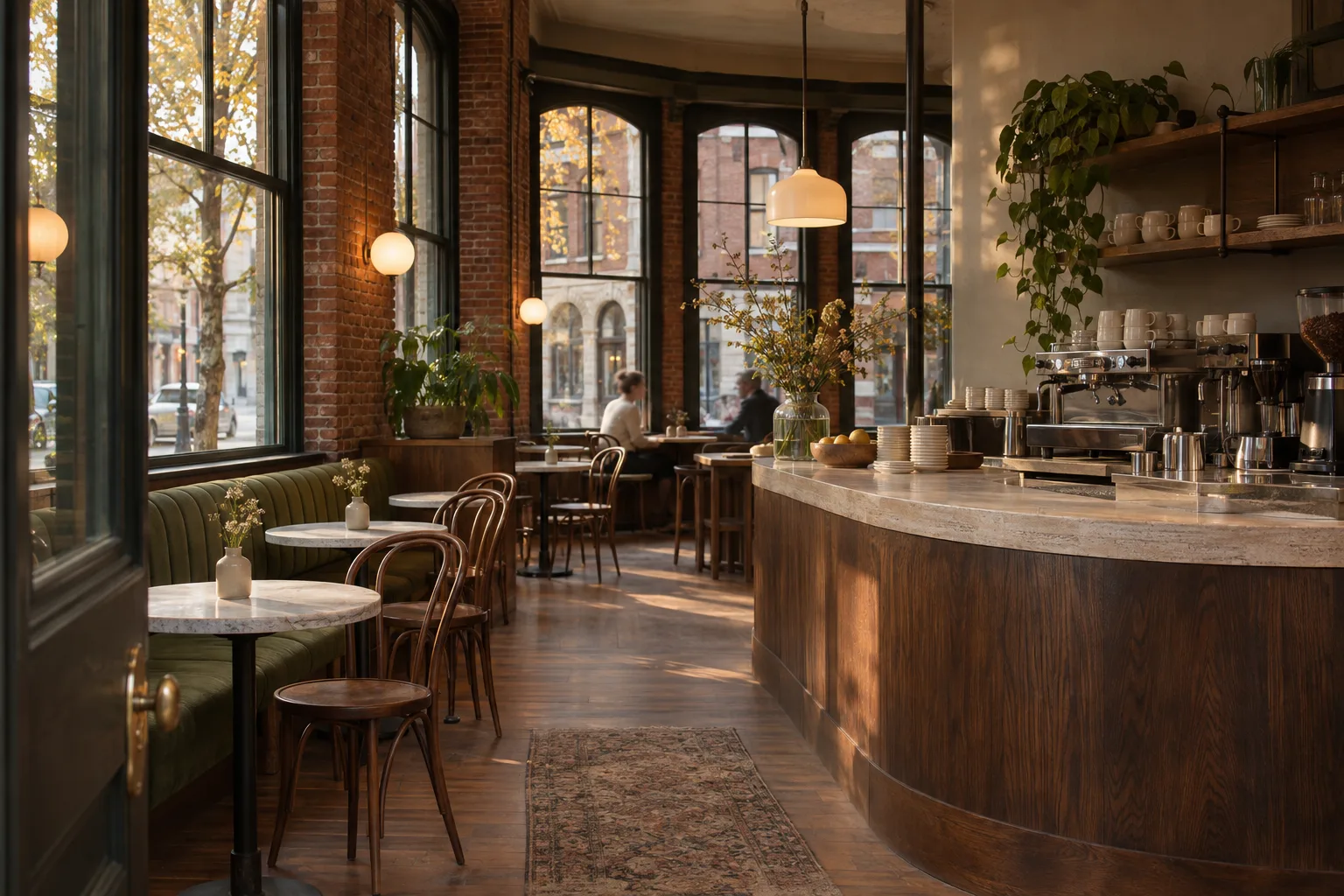
A seat at the window works for a person reading alone. A generous table makes an impromptu meeting possible. A banquette gives a family somewhere to settle. The room becomes welcoming when those uses can coexist comfortably.
Design the arrival
The first few seconds matter. A clear view of the counter, an obvious place to wait and a route that does not interrupt seated guests help a busy space feel calm. Hospitality is as much about that practical choreography as it is about atmosphere.
Sound is part of the atmosphere
A room full of hard surfaces can become tiring long before it becomes crowded. Upholstery, a carefully treated ceiling and the arrangement of seating all influence how a conversation feels. We consider acoustics alongside the visual palette, rather than as a problem to solve at the end.
At Common Ground, the banquette makes a comfortable edge while the central tables remain flexible. The counter is visible from the entrance, and a clear path gives staff room to move. The design leaves space for the neighborhood to make the room its own.
A question to take with you
Look around a place you know well. Which detail makes it feel comfortable, and which asks you to adapt? Noticing that difference is a useful place to begin a design conversation.