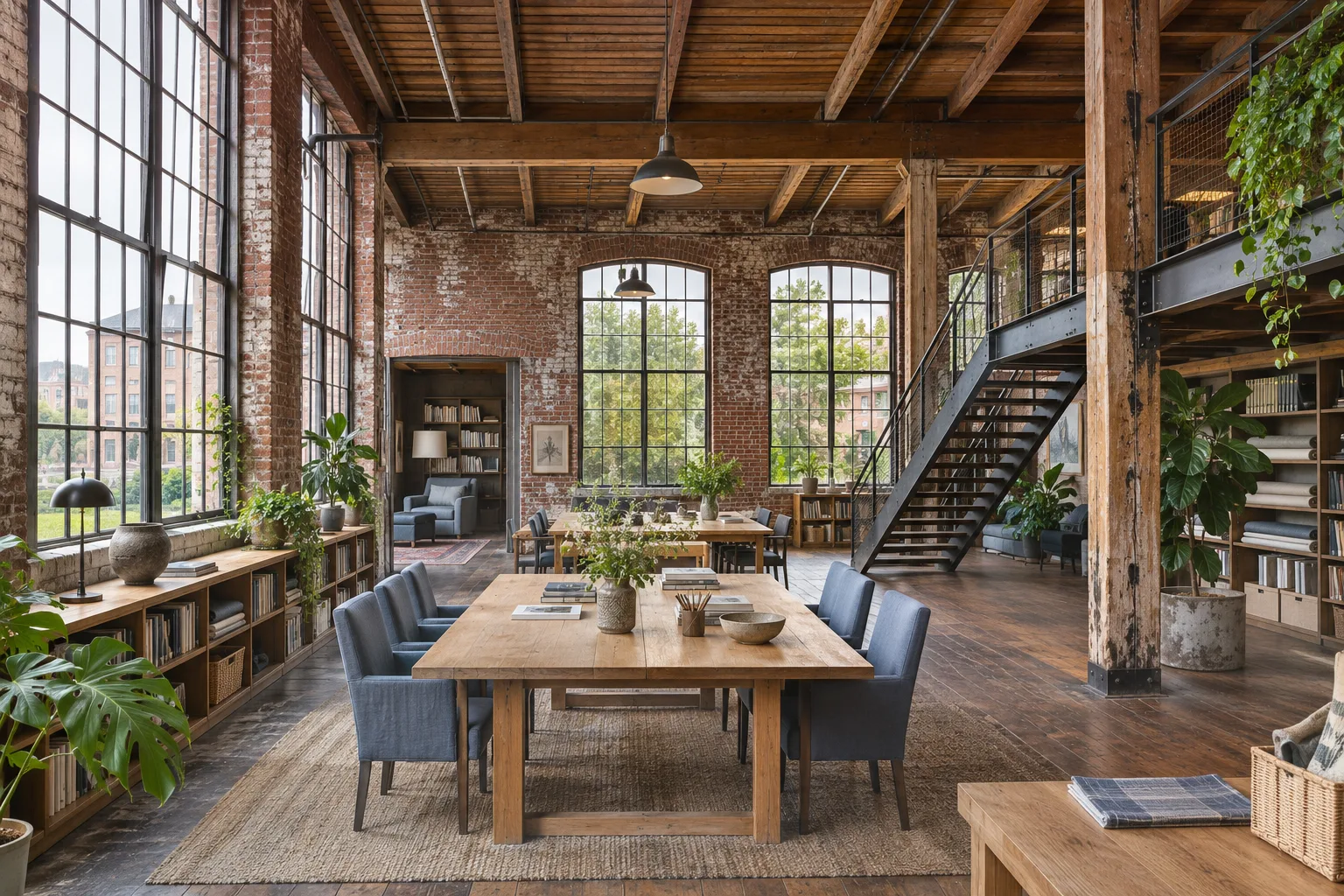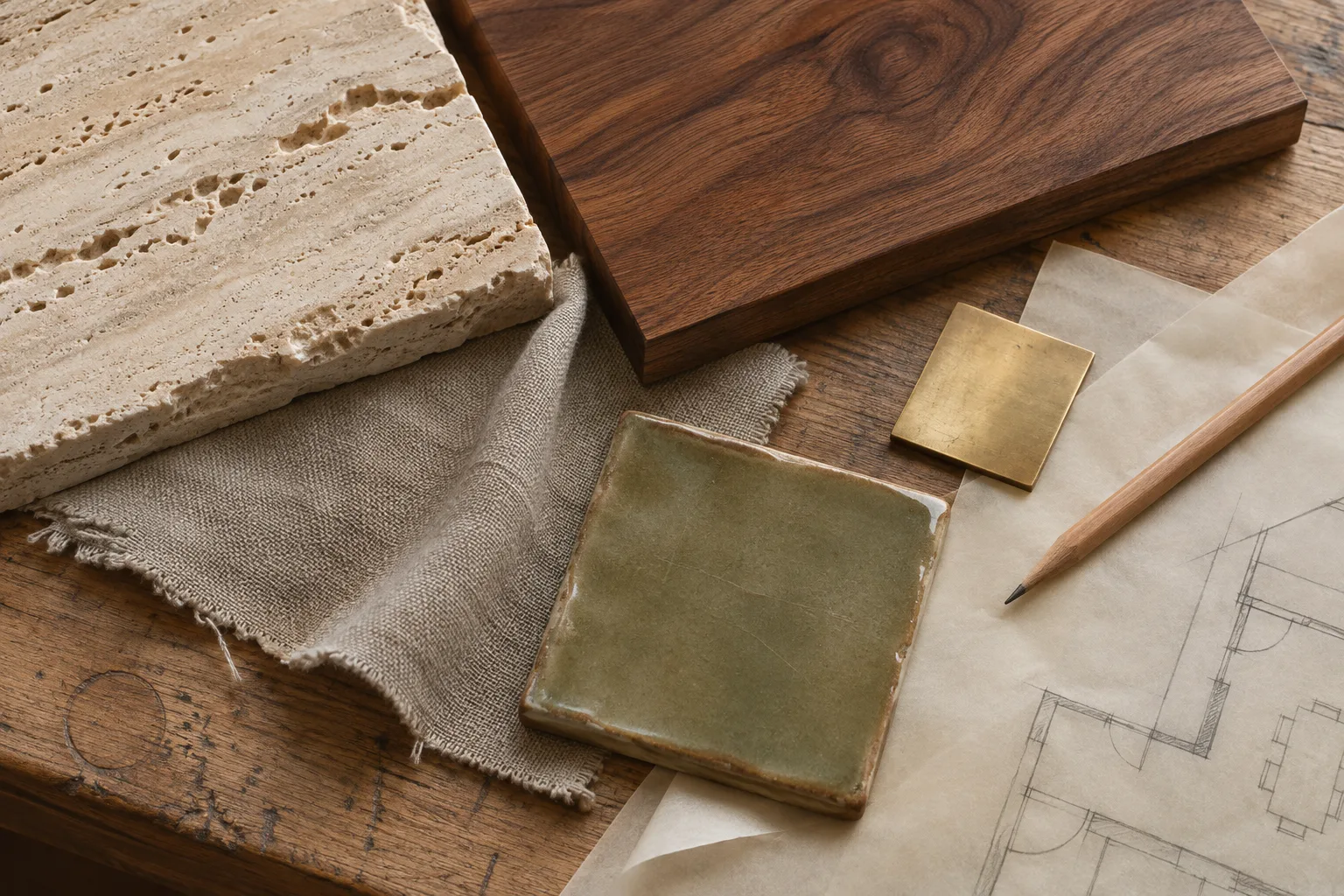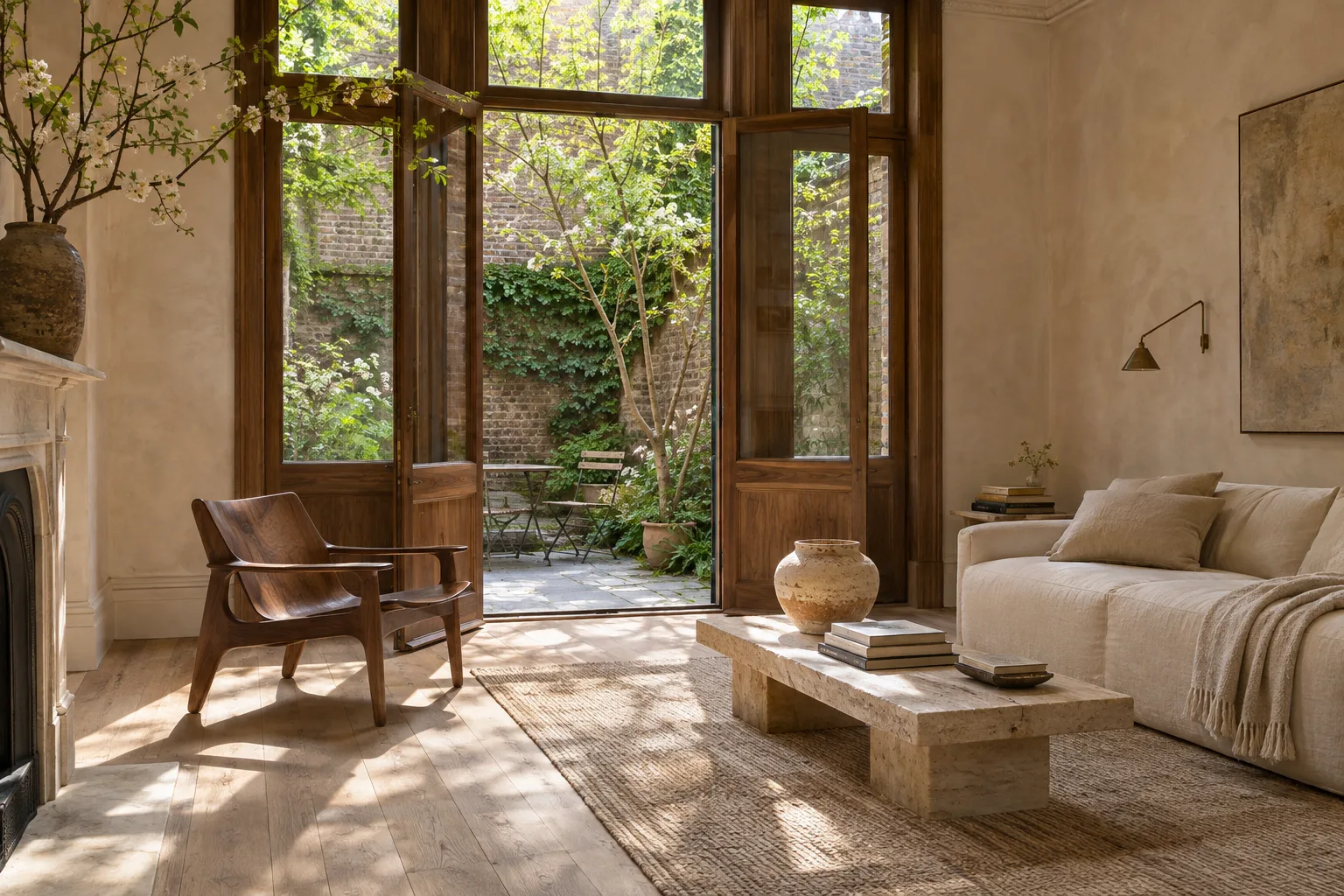
The quality of a room changes throughout the day. Designing with that movement in mind can make a small home feel remarkably generous.
Follow the day
Morning light belongs to a different set of activities than evening light. We ask where people want to wake up, read, cook and pause. A good plan allows those patterns to find the right part of the house.
More glass is not always the answer
A carefully placed opening can do more than a larger one. Deep reveals, borrowed light and views through adjacent rooms help balance brightness with privacy. We look for a relationship with the outside, rather than a wall that simply disappears.
The courtyard as another room
In Courtyard House, the garden is not treated as a destination at the back of the plan. Wide doors and a continuous palette make it part of the living room. Even when the doors are closed, the view gives the eye somewhere to travel and brings seasonal change into the house.
We also consider how a room works after dark. A home designed only for the brightest hour can feel exposed in the evening. Layers of low-level light, curtains and places to sit away from the glass allow a different, more intimate atmosphere to emerge.
A question to take with you
Look around a place you know well. Which detail makes it feel comfortable, and which asks you to adapt? Noticing that difference is a useful place to begin a design conversation.